Pages

Saturday, December 31, 2011

2011: A Self-Evaluation Report Card

At the end of a year I always find value in contemplating what was. This New Year's Eve the clock is hurriedly ticking away towards midnight, and in this post I am simply laying out some areas that are worth considering. When I left school for the real world, I often missed the comfort of receiving a report card that would tell me how I was doing, and what needed work. The end of a year (or any project) is a good opportunity to work that report card out from the inside. 

The areas to evaluate depend on one's priorities at a given time. This year my areas for evaluation were family, community, well-being, career, finance and enjoyment. Never before has family really figured in my awareness, but thanks to recent events it has been the key focus of this year for me. 

Each area can be scored with a symbol (A, B, C etc., just like school days), percentage, stars or smiley faces, but the important thing is to dig deep down to an honest self-evaluation. To make the evaluation meaningful, it is best to add positive achievements from the past year, as well as areas for improvement. Again, it is all about personal priorities, and these will be different for each person. 

So how did I do in 2011? Well, one thing I can be satisfied with is that there is a great deal of room for improvement! It was a traumatic and taxing year that asked a great deal of me, and while I learnt a great deal, I expected better from myself. The details are deep and dark and personal, and I will not include them here, but I will show my scores... and in a later post there will be more on the areas for improvement in the new year. 

Family: A-
Community: B
Well-being: D
Career: B-
Finance: B-
Enjoyment: C

As to enjoyment, I just might make the a C+ if I head out to watch the midnight fireworks now... Happy New Year!

Image: bigfoto.com

Friday, December 2, 2011

COP-17, Environmentalism and Education

Environmentalists protest the heads-in-sand attitude towards climate change. Image: Sierra Club Archive


I just can't ignore the double irony. At the COP-17 summit on climate change currently being held in Durban, South Africa, a group of well-meaning environmental activists led by the Sierra Club protested the head-in-sand attitude towards climate change by, well, sticking their heads in the sand. Now first, I have to wonder whether these devoted nature lovers are aware that the head-in-sand posture ascribed to the ostrich is, in fact, mythical. Having worked on an ostrich farm I can vouch that ostriches do not bury their heads in the sand (though rubbing their chins in the sand is one gesture in the animal's elaborate courting ritual). Secondly, this international band of well-intentioned young folk flew incredibly far to make that little statement. Although the summit has a token carbon footprint offset program, I do smell the petrol fume of a contradiction here that makes me suppress a little grin.

It is hardly that I am apathetic towards the environment and its cause (though nor am I some tree-hugging saint). Quite the contrary. As my sabbatical draws to an end my unambiguous conclusion is that the most important thing there is, is Nature. But the crux of my personal inquest has also been this. 

It is not up to Them. 

Certainly state and pan-governmental organizations, and of course industry, as represented at COP-17, have some clout in setting regulations and facilitating humanity's lightened step on this precious planet. Ostensibly, many of their intentions are good. And it is undeniable that though it is not nearly enough, some progress has been made in some areas. But ultimately, they are not the ones who decide. 

It is us. The approximately 15 000 people who jet around the world to attend a conference for a few days - some just to plant their heads symbolically in the sand for a photo opportunity. The millions who are exchanging the obligatory low-quality store-bought gifts this Christmas. The countless numbers unnecessarily running cars when public transport is available. wasting electricity because of poorly insulated buildings, gorging on methane-manufacturing bovines (des vaches qui ne rirent plus), and generally follow the collectivist Piper of idiocy in stead of marching to our own sensible tune. 

My criticism of the demonstrators is light-hearted and well meant, but I do think they have chosen the wrong target. To a large extent it was the leaders who got us into this mess, not necessarily because of their actions but because we, the people, followed them instead of our heads. Perhaps our heads were, indeed, in the sand. We have allowed ourselves to be hoodwinked into stupidity regarding our own relationship with Nature, which is so eager to provide for us abundantly. Yet rather than foster a garden that will feed us, how many of us work our fingers to the bone in soul-destroying jobs in toxic offices so we can afford imported, irradiated, preserved foods that age and ravage our magnificent human bodies, constantly upgraded gadgets that fill our every peaceful minute, luxurious cars that zoom us to indoor gyms where we go nowhere on our stationary bikes and treadmills and stairmasters, and of course, holidays to get away from it all. If we are following this societally ordained Piper, we may well wonder where he is leading us. 

Some weeks back I stated that the relevance of the Occupy Movement is most certainly to begin with oneself, and this couldn't apply to anything more than the matter of the environment. I do not deny that life is complicated, we all have demands to meet and we really do try to do our best. And I certainly am no saint: frequent flying is an occupational hazard in my line of work (though I usually stay a considerable while and contribute more, I hope, than merely burying my extremities in the sand), and for the past decade I have been paid with money derived from technology (Taiwan) and oil (Oman). Yet I do believe that the solution to the environmental (as well as economical and ethical) crisis begins with every individual. 

And that is how all this relates to education. Though the head-in-sand allusion is a myth, it fits well with the etymological meaning of the word education, which literally means to lead out. Never has there been a more urgent reason to lead ourselves out of that hole in the sand in which we find our heads. As a teacher, building the skills of independent thought in young people is my personal carbon offset program. I find it exquisitely insidious and divinely just to be doing so funded by black gold. As an individual, I have not yet perfected as light a tread as I would want on the earth, but I take the small steps that are available, go to great lengths to make "green" the path of least resistance, and am fighting hard for a habitat that will allow experiments in self-sufficiency for myself, and eventually as an education project. 

Because as far as I am concerned, the solution does not begin with "leaders", and it certainly will not be brought about by criticism. No. The only workable solution - say it out loud now - begins with ME. Whoever that person happens to be. 

Monday, November 28, 2011

Navigating the Third Space as Learning Space

Image: L'Epis Dore Patisserie and Cafe by mtcleroux
I love the idea of "the third space". According to a quick online search, the term originated in the writings of Homi K. Bhabha, who used it to describe an encounter between two cultures that requires both to explore a mode that is not native to either of them. The first use of the term I encountered, though, was architectural, as a place that is neither home nor work, but something different entirely (also known as the "third place"). Third spaces like parks, libraries, clubs and especially coffee shops provide refuge and play a big part  in the lives of city dwellers. 

When it comes to learning that is lifelong and life wide, third spaces are often the place where the action happens - increasingly on mobile devices. Thanks to today's mobile information technologies, killing time in a third space is no longer limited to reading the newspaper, either. An increasing percentage of mobile phones, and of course tablets, offer internet connectivity and even offline applications that can deliver an array of learning opportunities. From reading applications to news, converters, tutorials, quizzes, games and many more, mobile users really are spoiled for choice - if they choose to use their in-between moments and in-between spaces for learning, of course. Mobile learning - or m-learning, as it is affectionately known - has tremendous potential, but this depends very much on how (and whether) it is used. The relaxed atmosphere of our third spaces can be conducive to learning, but also to distraction. 

The real question here is whether mobile learning can follow the example of the third space. If it can become a mode that is neither work nor play, but something different entirely - and something we love as much as our geographical third spaces - mobile learning has inestimable potential across society. As for me, I am quite contented lounging in my third space of the moment, exchanging mobile learning and immobile languor as the mood suits. 

The image is of my third space of the moment, L'Epis Dore Patisserie and Cafe in Menlo Park, Pretoria. The Provencale garden, lined with lavender, and staff who have my order ready by the time I am seated, win my heart every time. 

Wednesday, November 23, 2011

Black Tuesday: The Media as Educator

Education, in an ideal world, should not be tainted by politics. Unfortunately reality is not an ideal world, and even the noble cause of learning is often swept along by political undercurrents. Yet, after completing formal education, a significant part of our education continues through the media. This is why I cannot pass up the opportunity to comment, as an educator, on South Africa's Black Tuesday

Black Tuesday Resistance. Image: Gulfnews.com
Tuesday, November 22, 2011 marked the passing in South African Parliament of the Protection of Information Bill. In a nutshell, the Bill claims to restrict publication of sensitive state information that could damage  national security. So far so good. However, it has been formulated in such a way that this "sensitive information" includes governmental corruption, which is a national pastime barely rivalled by soccer, rugby and blowing the notorious vuvuzela (see image). The free press has been a hallmark of this fledgling democracy, and has been instrumental in exposing corruption in government and business. (The two are more entangled than instant noodles - occupy that.) Corruption, meanwhile, fills - and sells - newspapers. The present Bill will make such reporting a criminal offence. 

Politiking aside, my concern is that this impacts educational function of the media in society. The news media enable ongoing civil education, specifically in emerging economies where access to formal education remains limited. Transparent reporting provides information that citizens need to make informed decisions about their future - not least when it comes to who deserves to represent their interests in government. Moreover, a steady diet of investigative reporting has been the lifeblood of newspaper sales. Without sales, newspaper budgets would plunge (further - the intelligent publications are suffering as is), reducing the budget for broader educational functions of the press. The bottom line, educationally, is that Black Tuesday threatens to make you stupid. On so many levels. 

One silver lining to the dark cloud is that this crossroads in my country's history has provoked unprecedented unity among South Africans. Traditional and social media shone in spreading the word, raising awareness and galvanizing civil action. Locally and internationally, the deafening cry for justice went unopposed. And that is the seething irony that leads us back to the vital role of education. How did an outrageous proposition pass parliamentary muster if the only audible voice is that of its opposition? Very simply, this "secrecy act" protects the corrupt majority of South Africa's current parliament, who were voted into power by the miseducated, ignorant citizens they are exploiting. If ever there was an argument for education, this is it. 

Sunday, November 13, 2011

Night of Hunters: Tori Amos Live in Johannesburg

Prelude
This is a study of expertise, not fandom. Fan culture has never been my thing. Even when I was a teenager, the artist who spoke to me most was completely unknown to anyone in my circle except for the friend who introduced me. And that was how I started following Tori Amos. Rather fanatically. That was twenty years ago, and things have changed. Not only has her popularity soared internationally (considering how unusual her work is), she has also become an icon within a South African demographic many mainstream artists envy - the type that pays for music. I find it mildly disconcerting that she has been discovered, but her following is clearly devout. When her Night of Hunters tour was confirmed in South Africa, it sold out within hours.

Image: toriamos.com
Whatever my misgivings about fan culture, Tori Amos takes her devotees as seriously as they take her. The nature of her music provokes a flood of mail, and she has famously gone to great lengths to support those who approach her with their own traumas. No apathetic rock star arrogance here. Her set lists include multiple encores, live performances incorporate requests and every new CD released includes a little surprise that wins hearts and minds.

Amos is profiled thoroughly for the current tour in an article for NPR by Ann Powers, co-author of her 2005 book Piece by Piece, so I won't go into too much background here. Suffice it to say that the Night of Hunters album is a departure from her previous work in that it draws heavily on her classical training. Not exactly what comes to mind when she straddles a stool to hammer on a prepared piano. Yet the technical precision of her technique and composition cannot be obscured. And so it came that I anticipated her first performance in South Africa with zeal that was, admittedly, fanatical.

Fugue
What stunned me about Tori Amos in live performance was her stage presence, virtuosity, range and forthrightness. Despite this, I also discovered that, more than ever, I am not fan material. Let's do this in style and consider each point in turn.

Of all the instruments, none is as potentially isolating as a piano. But in stead of playing the piano, Amos plays the audience. The almighty Bösendorfer (she is perhaps its most popular advocate) is positioned at a right angle with the audience. She faces the audience for the overwhelming majority of the performance, conspirationally involving them with shockingly intimate eye contact, contextualization of the lyrics and what feels like everyday conversation. Parallell to the piano is an electronic keyboard, and that brings us to her virtuosity.

If you ever listen to radio hits and think, ha, I can do that and better, Tori Amos puts you in your place. In her recordings the sound structure (pun unintended) coupled with cheeky innovation is clear. Under the pressures of live performance she does the basis of each piece absolute justice, but doesn't stop there. The live rendition is not a straightforward recitation but a living, breathing entity all of its own. Her level of comfort playing the piano and keyboard simultaneously, spread over the piano stool while facing the audience (or, eyes wide shut, the ceiling) is staggering and utterly humbling. Vocally and instrumentally she doesn't miss a single beat - or if she does, it simply becomes part of the organic whole of the live and living song. In Night of Hunters, she pulls all this off solo - a testament to her mastery.

Her range - stylistically, vocally, emotionally - may explain the growing following of music that is so far from easy listening. Although a few idiosyncrasies can become predictable, they could be put down as iconography and are easily forgiven. In the modern deluge of flawless machine music and edit-perfect vocals, the sounds Amos is willing to produce - from delightful to harrowing - is enlightening. Her vocals span frequencies from contralto to descant, always precise, but offset with growls and yelps and moans for which no musical notation exists. Emotionally, this provides an abundant palette to paint from. Add to that the opacity of so many of the lyrics, and it's no wonder that they take on a life of their own in each listener's mind. From the agonizing (think Me and a Gun, even more distressing live under a lone spotlight) to the light and frothy (Mr. Zebra), it's all there. How can one not be intrigued?

Finally, Tori Amos displays a stark naked forthrightness about things that rarely get airtime. The process of healing her own most traumatic experiences has been material for songs that have become public property and been widely embraced by minorities. (Notably the audience were predominantly, for all their White middle classness, misfits of every imaginable stripe and yes, I do count myself in.) She has been outspoken on issues that are often too taboo or just too sensitive to discuss, and many among her following claim this has affected them deeply. (During her encore she emphasized that the songs in a set "come" to speak to someone in the audience.) Despite a lot of fluffy love, lightness and sweetness, she makes no bones about her dislikes. The word "hate" makes a frequent guest appearance.

The evening's set consisted mostly of older songs (Little Earthquakes was the opener, with several tracks from Under the Pink and Scarlet's Walk). In the encore I was surprised to hear Blood Roses had been requested - the harpsichord (synthesized on stage) always gets me. It was the only song that set off my goosebumpometer. I was somewhat disappointed that the new album was so under-represented. Considering audience preference, though, the selection was perfect.  Either way, merchandise was flying off the shelves. And the devoted couldn't have been more pleased.

Intellectually and musically the performance stunned me far more than I expected. I was warned that Tori Amos live would be more than I could possibly have imagined. It was true. Yet on a personal level I was not touched in the way I had anticipated. My respect for the artist hasn't changed, but my relationship with her has. Admittedly, I feel disillusioned that those opaque lyrics that were once so central to my young adult identity have been claimed by so many. Worse, I am vaguely horrified at being grouped with the local fan base of pseudo-intellectual lower-upper-middle-class undercover Afrikaner misfits who came out to play, and more horrified still that the shoe fits. Nonetheless, it was a remarkable performance I feel thrilled to have been a part of. 

Coda
The opening act deserves special mention. Yoav is a South African-born acoustic guitarist. The term, though, doesn't nearly do him justice. He plays masterfully, but also uses the guitar as a percussion instrument and echo chamber, deploying an artillery of acoustic tricks. The result is as mesmerising to watch as it is to hear, and he is definitely poised for something Big.  His current album is entitled A Foolproof Escape Plan and well worth a listen. The playlist is embedded below.


Monday, November 7, 2011

A Little Sonnet


Image: Sony Pictures
Yesterday I went to see the thought-provoking film Anonymous, which confronts the controversial identity of William Shakespeare. In a thrilling intrigue of historical politics, the film explores the Oxfordian theory of Shakespeare's authorship. According to Oxfordians (whose numbers include highly credible literati), the true author of the works published under the name of Shakespeare was Edward de Vere, the 17th Earl of Oxford

The theory is controversial, and it is worth noting that the film itself portrays some historical inconsistencies. In fact, it appears that some Oxfordians consider the film a discredit to their theory. Whatever the historical truth, Anonymous makes for good viewing, and has interesting implications for authorship and identity in the 21st Century. 

Meanwhile, Sony Pictures promoted the film with a promising social media campaign which included a "Shakespeare-ience Quiz" and a challenge to create a sonnet or a coat of arms for Shakespeare on the official Facebook Page. Unfortunately the page, though "liked" by many, did not show much wall interaction. The Sonnet challenge simply displays a preview of the movie, and I couldn't find any evidence of answers to the call. Yet the challenge was irresistible, and I posted mine to the Wall. It seems to have been moderated, but I still think it is a challenge worth meeting. My humble offering, built on a slew of Shakespearian expressions and arguing that the true authorship is not as important as the contribution of the works, is below. The film also raises some interesting questions on the nature of authorship, identity, plagiarism and anonymity in our times. 

Sonnet
On the Author of the Works by the Man they Call Shakespeare

We dare to ask, again, what's in a name?
His words would either way be just as sweet
If they were not by him who snatched the fame
But master of the wild-goose chase we've yet to meet.

Perhaps the sceptics do protest too much
When they insist the wielder of this quill
Could know the classics, royal ways and such,
Transcending humble roots with iron will.

The fact remains the author of these Works
For sure was anything but fortune's fool
What he left us, regardless of his quirks,
Has stood the test of time, the stage to rule.

It matters not if ever you are king.
To reign beyond your years, the play's the thing.

Saturday, October 29, 2011

Occupy Yourself

Image: mtcleroux
Wherever you stand on the matter, the Occupy movement, which began with Occupy Wall Street, makes a point that cannot be ignored. The nutshell Occupy demand is for leadership - political and corporate alike - to be accountable and fair to those they lead. Specifically when it comes to money.

Power and resources (read: money) are, of course, not new bedfellows, and their relationship guides my title: Occupy Yourself. It is absolutely valid and just that we demand accountability, fiscal and otherwise, from our leaders. (In a free market democracy the argument goes that they wouldn't be leaders in the first place if we hadn't put them there based on their positive traits.) People who want to camp out on Wall Street or elsewhere to demand this are welcome to it, provided they do so civilly, but I think there is more at stake here.

The question I ask is, before we occupy Wall Street, Washington or Warsaw, can we honestly say that we have occupied ourselves? Are we fully accountable and fair in our actions, whether it is in the way we treat others (especially those in positions of less power), our environment and, yes, our own finances? Do we make provision for ourselves and others by being resourceful, cultivating what we have (whether it is talent, human relationships or a patch of soil that can be nurtured to sustain us) and exercising control over, yes, our money? Are we in control, or are we in an entertainment-induced daze of ignorance? Are we the ones who choose how to invest our funds, or do we allow ourselves to be duped into buying products we don't need with money we don't have?

Accountability and fairness, and giving "the 99%" their piece of the pie, is a fine cause. But rather than occupying Wall Street, I hear this movement as a call to Occupy Yourself. As the chief leadership in your affairs, I dare you to accept this challenge to be accountable for yourself and your actions, to be fair to those with less money, less supposed power (and to yourself), and most certainly to be resourceful, making the most of what you have. And you have a whole lot more than just money: you have a mind that you can cultivate and make up to act on your own decisions, not on what some brand or bank or pinup or politician or even protesters in tents tell you.

Occupy Wall Street if you like. It is a noble cause. But Occupy Yourself first. In every sense of the word. Tent optional.

Tuesday, October 18, 2011

The Best Things in Life Are Free (Or: Nature is Not a Product)

Drop a seed, accidentally, in fertile soil and it will grow. Nature is free. It perpetuates itself abundantly, beyond borders and even in the most inhospitable environments. And it costs nothing. 

Image: Food Forest at Tagari by ecofilms.com.au
When divination inspiration Anel Hamersma blogged about the online commoditization of spirituality recently, she was perfectly on my wavelength. It is reassuring that someone else sees the plot. Somehow the pursuit of happiness has been turned into a product - preferably with a renewable subscription or platinum membership scheme. The same has happened to nutrition, exercise and ecologically sound living - all matters which are close to my heart. 

I was made awkwardly aware of this fact at a recent health and wellness exhibition, where a veritable army of desperate salespeople, clueless life coaches and dysfunctional would-be gurus persuaded me to do one thing: get out as fast as my less-than-supermodelesque legs could carry me. (Good exercise. No charge.) 

It is painfully true that health, wellbeing and ecologically sound living are more vital than ever. I am delighted that more people are become aware of, and passionate about, these matters. I am heartened that passionate people share their knowledge and inventions and, yes, make a living out of this work. From time to time, I am even ecstatic to find a rare organic superfood, inspirational exercise class or eco-friendly gadget for sale in my neck of the woods. 

Yet common sense, logic and wisdom state that healthy eating consists mainly of eating less commercially mandated, highly packaged, food mile-laden fare. The best exercise comes from living life to the full out in the open air rather than driving to a swish gym. The most eco-friendly action is not to buy that new gadget that promises to turn your home into a lean, green, Earth-saving machine. 

Health and wellness products have their place. But if nutrition, exercise, serenity and ecological harmony are the goal, perhaps it is better to plant a modest food garden. It's virtually free and potentially self-perpetuating, provides organic nutrition, hale activity, spiritual satisfaction and a legion of ecological benefits. Though there is nothing wrong with spending money or marketing hype on well-being, it's good to remember that nature belongs to everyone. And it costs nothing. 

The image is from ecofilms.com.au's documentary of the food forest at Tagari, the farm cultivated by Permaculture founder Bill Mollison. What is so remarkable about Tagari is that the food forest became even more productive after being abandoned for several years - a true test of sustainability. While one may argue that starting up a garden costs money, it is equally true that it can be done resourcefully on a shoestring, that many plants can be propagated for free and, ultimately, the yield of perennial plants far outweighs expenditure. 

Tuesday, September 27, 2011

Experts Advocate the F-Word

The brain, neuroanatomy, anatomy and biology loom large in my awareness right now. Taking care of a stroke triumphant is really making me see my brain, my body, my life and my world in a new light. 

Since I first rerouted my planned sabbatical to assist my grandfather after his "brain attack" on June 22, 2011, he has made progress I had not even dared hope for. He has progressed from unconsciousness in a hospital bed to living at home, using both hands deliberately, verbalising his needs and even abstract ideas, and is enjoying three meals a day. Though this may seem modest, it is a vast improvement that has brought awareness - if not awe - of the wonders of the brain's recovery to all those around him.

In an earlier post I included a presentation by Dr Jill Bolte Taylor, a neuroanatomist who had the rare privilege of consciously experiencing a stroke herself. After a long wait I have finally received her book, My Stroke of Insight: A Brain Scientist's Personal Journey. Written comprehensibly for an audience of mere mortals, it provides a background on the brain and the functioning of its hemispheres, as well as an episodic description of her own stroke, treatment and eight years of rehabilitation to complete recovery. In Dr Jill's case, the recovery was so complete that she is now an active, academic advocate for stroke awareness, and specifically for tapping the extraordinary functions of the oft-neglected right hemisphere of the brain. 

It is not without reason that I have mentioned the hemispheres of the brain and their respective functions. Since the work (and Nobel Prize) of Roger Sperry  brought brain hemisphere research to public awareness, the idea of literal left brain thinking and lateral right brain thinking has resonated with fools like me - the oddballs who easily surrender to the fertile chaos of the right brain. What  My Stroke of Insight demonstrates is just how dramatically the right brain's functioning differs from the left brain-dominant thinking that more or less runs the modern (Western?) world. Though I am no expert, the author suggests that 75% of strokes take place in the left hemisphere, while Wikipedia states that a stroke typically affects the dominant hemisphere, and also that the frontal lobe of the left hemisphere is the most common location. At this point I would like to add my layperson's suspicion  that (a) strokes are far more common in the modern/Western world and (b) so is left hemisphere dominance. Statistical confirmation is most welcome. Dr Jill's resources on the subject - some spanning centuries - can be found on her resources page

A keystone of My Stroke of Insight is that the right brain hemisphere offers a sense of connection, flow and profound inner peace that is underemphasized, if not completely foreign, to the ways of modern life. Cultivating a "balanced brain" is a goal fostered by the book, and since the left brain is rarely neglected by the modern education system and workplace, right brain stimulation is advocated. The right brain can be stimulated through myriad activities, but specifically on those phases that require complete absorption as opposed to mechanical practice: yoga, dance, musical performance, art, sex, being in nature, juggling, play, preparing food, fixing something, and pretty much anything that makes you lose track of time from sheer engagement (blogging, in my case!)... and isn't it odd that these activities correlate exquisitely with the Flow activities described by Mihaly Csikszentmihalyi

It looks suspiciously as if the experts are advocating nothing other than the f-word. Yes. They are advocating fun. Does it work? My experience with a stroke veteran, students, colleagues, customers and my evasive self is proof to me. 


Monday, September 19, 2011

A Train - And An Adventure

The most fascinating adventures are not fit to print. Suffice it to say that many of mine* started on trains. And so it is that I often hanker after a train when there is none to be found. When the Gautrain, South Africa's first mass rapid transit system, was recently declared open, the promising implications for the country, commuters and economy were overshadowed by my admittedly selfish, unbridled glee. When I finally made it to the Gautrain this weekend, the experience did not disappoint. 

Sharing Gautrain photos
I bumbled curiously into the station, and was immediately seduced. The Gautrain system has managed to dispel that most ominous of spectres that so easily haunts a nation like this one: hopelessness. Hope, pride and promise oozes from every gleaming inch of the station, the trains and convenient connecting buses. Patriotism is not my strong suit, but when my train swooshed, gleaming gold, up to the platform there was a lump in my throat. The excitement of the weekend crowd, most of them also first-timers, was disarming, and I couldn't help but join the chatter as countless families immortalised their historic first Gautrain ride on camera. 

Emerging from the Rosebank station
Predictably, there was a mass exodus at Sandton, notorious for luxurious shopping. A small crowd remained for the last stop (at least until construction is complete): Rosebank. The soundtrack to all this poured down into the station: The Soweto Marimba Youth League, seen in the video below. Emerging from the long, steep stairwell, the familiar skyline and stingy spring sunshine of Johannesburg confirmed the surreal impossibility: this truly was a different city. Not just any city, but the one where I was born and raised. A city evolved.

The Soweto Marimba Youth League (www.smyle.co.za). Click to play video clip.

* Not just the one involving a multingual Indo-Argentinian Tantra master in Pondicherry who needed a traveling companion to watch his backpack, which happened to be crammed with a few million rupees. 

Images: All images in this post by mtcleroux. View the full Rosebank album in Picasa Web Albums

Thursday, September 8, 2011

Parallel Reading: Art, Science and Magic

Bookplate of Willard S. Morse 
This post is about a very fruitful way to take on reading for learning and creativity. I call it parallel reading, which I define as reading several texts (from any field) at the same time. (A similar definition is used by confusedofcalcutta, who suggests that Internet use has made us read more in parallel. Another definition, often used in education, is to have different people read the same book to gain different perspectives.)

Having long  lived in non-English speaking countries with only access to very limited academic libraries, I delighted in the simple pleasure of joining a local community library recently. The luxury of choosing SIX books on ANY topic was just too much to savour in my limited time, and I wound up randomly grabbing a few things off the shelf, even though I was still deeply embroiled in a few books at home. 

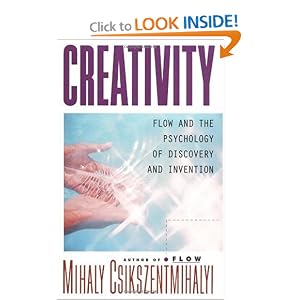
Since this is, after all, my (somewhat rerouted) sabbatical, I am enjoying the interdisciplinary cross-fertilization of ideas that is emerging from my many readings. In fact, the strategy gels well with the ideas expressed in my current read by the "Father of Flow", Mihaly Csikszentmihalyi. In his book Creativity: Flow and the Psychology of Discovery and Invention, one of his conclusions is that interdisciplinary thinking is fertile soil for paradigm-shifting creative discoveries. My current readings are nothing if not interdisciplinary. Let's have a look. 

Life Science, a high school textbook picked up off the library shelf, is filling in the shameful void in biology and chemistry that somehow arose from my arts-based education. Though covering concepts that seem basic to some folks, I am continually stunned at new discoveries I make on each page. (I can't possibly confess just how basic some of them are!) The history of scientific discoveries in the book also illuminates some of the ideas in Creativity, mentioned above. Yes, I am reading a school book and I am loving it. 

After reading a recent magazine article on the whole brain learning research of Dr. Kobus Neethling, I was interested in finding out more about the work if this super-achieving fellow South African. Surprisingly, his book Am I Clever or Am I Stupid was on a shelf right next to me. One more serendipitous piece of the puzzle and  further connection with the theme of creativity. 

In the background, my Permaculture studies are also simmering away. This is actually a priority, and the reason behind the Life Science reading. In addition to the course materials, there is a whole lot to read! There is even more to do, and I am enjoying gradually taking hold of my own little piece of land to begin my forest garden. 

Another good read is The Personal MBA by Josh Kaufman. I actually bought this at the airport and started on the plane, which resulted in very good in-flight service. I find the fundamental things apply, and the world of business makes an interesting counterpoint to nature and the mind, that seem to be my other main themes. 

Since I have just started Nia classes (and am absolutely infatuated with this martial arts/dance/bodywork fusion form), I am also re-reading The Nia Technique. The anatomical approach ties in nicely with the Life Science reading and the adventures of my two (much loved) left feet in class.

There are drawbacks to reading this way: some books remain unfinished, picking up the train of thought can be tricky, and then of course choosing what to read now is a challenge. Yet the fertile friction between ideas from different fields can be most stimulating. What is more, it helps to maintain a broader perspective on things. I am enjoying all my reads, and the pleasure of reading in parallel is exponential. And so... to bed, curled up with a crisp new copy of Yoga Journal

Tuesday, August 30, 2011

Retreat! The Hoogland Health Hydro Experience

As promised, I just returned from a restorative retreat with new ideas and heaps of energy to move the molehills (no longer mountains) ahead. By grace I was able to take a few days away and get back to grips with the fundamentals of a good life: a healthy mind in a healthy body on a healthy planet. For this I have to thank my phenomenal support network at home, as well as the remarkable team at Hoogland Health Hydro who restored me to life.

This post highlights Hoogland Hydro's philosophy, which added a new angle to my existing views on natural health. These principles can be applied anywhere, but this hydro is an especially magical place to take them on, thanks to its uniquely natural surroundings, people with heart, mineral-rich groundwater, peaceful ambience and, of course, therapeutic facilities.

Image: One of Hoogland's magical pools
via Wealthwise Magazine
About Hoogland Hydro
Hoogland Hydro, about an hour away from both Pretoria and Johannesburg, is situated in the Schurveberg, an area where the rugged hills have preserved nature from urban encroachment. The hills bristle with indigenous plant life, and visitors to the hydro often see animals like eland, hartebeest, Blue Wildebeest, baboons and monkeys. In fact, when my temporary neighbours left their sliding door open, they found their fruit basket raided by baboons.

Being a hydro, the main attraction is water therapy, ranging from the jet pool to jacuzzis (one outdoors!), saunas, steam baths, Turkish baths, sitz baths and warm and cold pools. Hoogland's water, rich in calcium and magnesium, is also bottled for drinking, and is abundantly available everywhere on site. Another attraction is bodywork and massage therapies, which run the gamut from traditional massages to rare, emerging techniques and beauty treatments. Tasty, wholefood buffets, including a 24 hour fruit buffet, are included with accommodation, as is daily health monitoring by a medical nursing sister. Guided nature walks are presented every morning and evening, and evening lectures are open to all guests.

In its heyday, Hoogland Hydro was known for a stringent and unyielding regimen, usually beginning with monitored fasting, followed by a raw food diet, in conjunction with therapies. Today this is still an option, though guests are free to choose a level of commitment to suit their needs. However, a five step detoxification process is advocated throughout the hydro. The rest of this post will briefly look at each of the five steps, as well as a sixth: what to eat (or not). In themselves, the steps are not revolutionary, but their sequenced combination provided me with quite a revelation, and an inside-out glow to prove it. It's hardly rocket science, but the new perspective is definitely worth a try.

1. Exercise
The first step of the detoxification process, exercise, not only gets the heart and lungs working, but mobilizes toxins lodged deep in the tissues. It also encourages the release of endorphins, the brain's feel-good messengers, which are a priceless ally. At Hoogland there are many options for exercise: guided nature walks every morning and evening, stretch and aqua aerobics classes, swimming, various disciplines presented by a personal trainer, and of course independent exercise. I also often opted for pre-dawn yoga in my room with the sliding doors wide open, or on the expansive lawn.

2. Body Work and Massage
The second step is to dislodge any further toxins, and induce relaxation, through body work and massage. An array of traditional and modern massage therapies are on offer throughout the day. Water massage facilities – the jet pool and jacuzzis – are available 24 hours for those middle-of-the-night energy bursts. I enjoyed a massage every day – Swedish, aromatherapy, Indian head massage – and hit the jet pools or jacuzzi frequently. A whole new bodywork experience, though, was aquassage, where I found my body afloat in a warm, shoulder-depth pool, untangled and spun through sensory-deprived space for a blissful hour of pure serenity. A rare find, highly recommended.

Image: American Cyclopaedia
3. Heat and Sweat
In the third step, dislodged toxins are moved out of the body with heat and sweat. The heat treatments are intense, and can be quite a test of endurance, but they are enormously effective. The sauna is an old favourite of mine, but I especially enjoyed the Turkish steam bath, which is enhanced with a few drops of eucalyptus essential oil to clear the airways. After a few days of steaming, all visitors have a radiant glow that distinguishes them from new arrivals, and steam is definitely a major reason for this.

4. Cold
Having released toxins and opened the pores, the fourth step brings the process to a chilly close. This closes the pores and puts the release of new toxins on hold. A bracing shower is also an undeniable return to reality after the lazy comfort of treatments and heat.

5. Rest
The fifth step is a firm favourite of mine, and one that should be practised at least daily: rest. It is a shame that in a stressed and overworked world, it is easy to get so tangled up in worries that even sleep is not restful. After the exertion of exercise, massage, heat and then cold, languor rather than fatigue takes a seductive hold. This is one step I never skimped on, enjoying lazy naps on deck chairs, or on the pristine whiter-than-white linen in my room... easy to implement anywhere.

Image: Rooibos tea 
via steelsmithealth
6. What (and Whether) to Eat
Today, diet is no longer formally included in the general advice provided to all guests at Hoogland, although it has formed a key part of the hydro's work. All guests have access to the 24 hour fresh fruit buffet, as well as three delicious, wholesome buffet meals per day. There are also abundant supplies of Hoogland's magnesium-rich mineral water, and many flavours of rooibos tea, one of South Africa's health staples. During my stay, I merrily indulged in all these delights whenever I felt the need, and definitely felt more energetic after the initial adjustment. It struck me that there were no real “temptations”: I brought along dates and pumpkin seeds in case of starvation, but really didn't need them.

However, some of the great success stories at Hoogland have involved strictly supervised fasting in combination with the five steps introduced above. The resident physician and owner has penned two books on the subject of the nature cure, in which he advocates dietary habits that support good health. In many ways his advice is not as radical as expected: his main strategy is to pay heed to biofeedback, especially hunger signals, and to eat food in its most natural form as far as possible. Ultimately he advises one day of water fasting every week, as well as longer fasts on a seasonal or biannual basis, or supervised fasts when there is a health crisis. This is an area well worth looking into, especially for chronic medical conditions not alleviated by allopathic medicine.

The weekly fast is an idea that resonates with me, and I have designated Mondays as herbal tea fast days. Yesterday was my first, and I was stunned to see how much I got done in the time that others cook, eat and clear up! From Sunday evening to Tuesday morning leaves a 32 hour period without solid food, and I found it very refreshing. As for the rest of the week, I am very keen to maintain a high-raw, wholefood based, red meat-free diet. In my humble opinion, truly delectable, occasional indulgences are also very good for body, mind and soul, and I intend to make the most of them when the occasion arises. As far as I am concerned, my homemade ice cream, chocolate or fudge are all superfoods - in small doses.

And that makes five plus one little steps to more serene and healthful living. The hydro experience recharged me at a level no ordinary holiday could, and I have every intention of maintaining the benefits as I return to reality. That is the ongoing challenge, and it is where the true gold lies.  

Monday, August 22, 2011

The Second Spring

One of the marvels of our planet is the way its northern and southern hemispheres have different seasons. My unique migratory pattern ensures that I often share in the joys of spring not just once, but twice in a single year. And I take spring very seriously, however often it happens. 

Spring. The season that inevitably reminds us of new beginnings, new life, and rebirth. New warmth, new colours, and fresh new aromas cajole nature, mind and body out of stagnation. It is the perfect time to start afresh.

Image: Giovanni Paccaloni
Spring is beginning to show its full spectrum of colours in the city of Tshwane (formerly Pretoria) where I am stationed for the second half of 2011. In fact, it is known as the Jacaranda City, thanks to the countless jacaranda trees that line the streets, turning everything a unique shade of whispered indigo. In the lovely and slightly wild garden of the family home, a jasmine bush has clambered all the way to the second floor, winding its perfume along the breeze. Reminders are all around: it is a time of new beginnings. 

Rather than just "spring cleaning", this year I am doing a fair bit of organizing an streamlining as well. I am sorting out the areas where I work, leaving systems that make it easier to maintain good order without much effort. Computers are also being spring-cleaned. And perhaps the most important and long-last spring-cleaning is for my body and mind: I will be on retreat at the Hoogland Heatlh Hydro just outside town for the remainder of the week. This is a real highlight that I am looking forward to (and need!) immensely, and I am infinitely grateful to the kind souls who have made it possible. 

The bottom line about spring-cleaning is not just to clear things up, but to make the better system sustainable. This is the plan when spring-cleaning not only my environment, but also my mind and body. New beginnings are wonderful. Always. But they are even better when they are sustainable. 

Embedded below is "Spring" from Vivaldi's The Four Seasons, as led by enigmatic soloist Nigel Kennedy. Until next week....

Tuesday, August 16, 2011

Human Rights and Freedom (Mine)

3 A.M. I wake up with a breathless sigh and try to drown out a complaining mind by counting my blessings. A cozy bednest, albeit on the floor with a sonorous soundtrack of family snores. My health - not the exuberant, radiant health of living on my own terms, but at least the absence of severe disease. My spirit, that has survived cities and forests and deserts and dark, dark nights of the soul before. And will survive again, through this most difficult test of all, which I try, try so hard, to see as a blessing.

Which, of course, it is. I am very fortunate to have the luxury of taking several months off to be there when my family needs help. Taking care of a stroke survivor is mentally, physically and logistically demanding, but having a dedicated caregiver and such an eager patient really lightens the load. A stringent schedule of hourly tube feedings, turning, passive exercise, transfers, ambulations and acitivities makes for a full day, even with assistance, but it is doable and often very rewarding. That was what I signed up for, and I really am pleased to be involved - not to mention thrilled at the progress I have seen. 

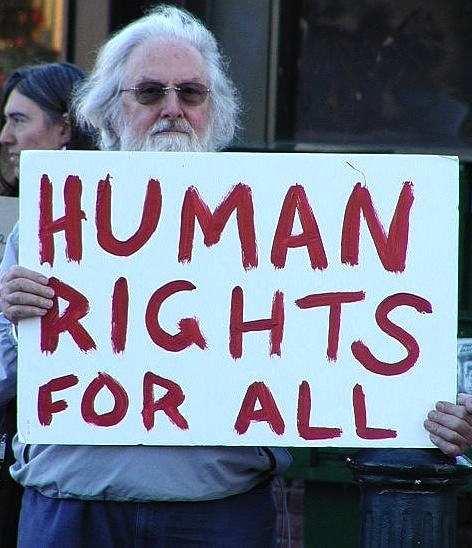
Image: ukhumanrightsblog.com
The fine print in this deal is what I was not prepared for. Somehow I completely overlooked the fact that living with family (mine, at least) involves a more or less complete surrender of basic human rights. Being the youngest member of the household also entitles me to receiving the blame for whatever goes wrong. So much for Universal Human Rights Articles 1, 2, 4, 5, 6, 7, 8, 10, 11, 12 and 29. As to Articles 18 and 19, which relate to freedom of belief and expression, let's get serious. Religious eccentricities may be tolerated, but any questioning of the household status quo will not. Belonging to a family is an area in which my experience is inadequate, and I have a lot to learn. 

The plot thickens, though due to Article 19 above, I daren't say too much. It involves an avalanche of untended papers covering half a century of mostly irrelevant documents, which conceal the occasional crucial piece of a puzzle that must be solved to ensure material survival. Then there is also the occasional essential paper that proves not to exist. And of course the general communication issues that arise in a household - a challenge for me after almost half my life in domestic solitude!

Amid all this, another blessing. I have free choice. The choice to accept the problems (not an option). The choice to try to make things work, despite previous failures. The choice to bail on my commitment. The choice to learn from this.

If my presence here does nothing but reinforce an unrelenting and suboptimal status quo, it does nobody any favours. Quite the contrary. But what exactly are the options?

This is by no means an emotional lament. That is not a luxury I indulge in. My focus is learning, and that is why this matters. Ultimately, whether other people are willing to learn or not is their choice, even if their refusal is destructive. But what should I learn from this situation? To comply with a severely sub-optimal situation? To carry on trying? To give up? Or is there something else? What learning is the blessing in this?

Update (August 16, 21h17): Solvitur ambulando. This Latin phrase, attributed to Diogenes of Sinope, has a dual meaning: (1) it is solved by walking and (2) the problem is solved with a practical experiment. Both apply. Early in the morning I hit the road, and after a long walk, think and the very soothing purchase of a fabulous new backpack (just in case), returned home. That was the walk. As to the experiment, a good, honest talk (unusual in a notoriously diplomatic household) was long overdue and cleared the air. The experiment continues, and the walking should as well. The backpack will have to wait. 

Saturday, August 6, 2011

Sharing a Stroke of Insight

In previous posts I reported on my planned sabbatical for the second half of 2011. It turns out life had a far more intensive sabbatical planned for me. Late in June my grandfather had a severe stroke that affected the left hemisphere of his brain, leaving him without speech or movement in the right side of his body. Rather than travel the world to learn new things, I returned home to learn a great deal more. 

My work, for many years, has involved learning - lifelong, lifewide, life changing, as the title of this blog declares. The mystery of a stroke survivor's recovery is an intriguing testament to the magnificent architecture of the human mind. Observing and participating in my grandfather's re-learning is a challenge that grips my heart and mind. 

My grandfather is now returning home after six weeks of hospitalization. Since he will no longer have regular access to therapists working on his speech and movement rehabilitation, our family will be working with him to continually stretch his abilities. His progress in gradually beginning to speak and use both hands deliberately has already been staggering, and I look forward to sharing in his wonderment as he rediscovers the world through very new eyes. 

One source of profound inspiration has been the work of Dr. Jill Bolte-Taylor, a neurologist who experienced a stroke herself, and today shares her insights from the experience after an eight year recovery period. Today she shares her findings in her best-selling book My Stroke of Insight, through talks such as the one below, and in talks like the one embedded below thanks to ted.org. The implications of her research - enhanced by personal experience - are as stirring as they are thought-provoking. It is a deep motivation to see ourselves, the world, and the experience of stroke survivors, in a very different light. 


Monday, July 25, 2011

Chains, Strings and Self-Imposed Shackles

Image: staticmixers.net
Baby elephants are trained by tying them to a pole with a thick string or chain that makes it impossible for them to stray far. Before the elephant grows into a large and powerful animal, it becomes accustomed to the fact that, when bound, it cannot go far. This assumption becomes so powerful that the adult elephant need only be tied with a string to keep it from wandering. 

Having newly arrived in my home country for an emergency visit, I still have a fresh, objective perspective on everyday habits here. I find it surprising how many of the restrictions that exist in this society, within my ethnic culture and within my family are so overwhelmingly powerful, yet almost completely imaginary. The habits are simply so strong that they are not even questioned. 

Many of these habits are positive. Almost two decades after the demise of the apartheid regime in my homeland, it is heart-warming to see the general respect and benevolence between different cultural groups that has become a habit. The force of habit also drives many positive actions in my family, such as sitting down to meals together and truly engaging each other in meaningful conversation. 

Yet the self-imposed shackles of some of our negative assumptions are even more powerful. South Africa's legacy of economic inequality and ensuing crime colours so many of our daily actions. Most cars are not only locked at the doors but also at the steering wheel or gears, and house doors are commonly protected with a second steel gate. At a mobile phone customer services desk I recently waited half an hour for service from one of three clerks while surrounded by three hovering security guards. In the family home where I am staying, an outdoor light that was, according to all reports, thoroughly broken, lit up when the lightbulb was replaced, and years of mental gymnastics to accommodate a single front door key was solved with a R15 (US$2) duplicate. Unquestioned assumptions are worth looking into sometimes. 

There is nothing wrong with habit: it is, after all, a force powerful enough to keep a three tonne elephant in captivity with a mere string. But a force that powerful should be applied with great awareness and care.  If the habit does not serve, it is good to know that the imagined shackle is simply a string. And it can be broken. 

Monday, July 4, 2011

Being the Magician's Apprentice

Frankincense Ice Cream Logo in Arabic
I have always wanted to be a magician's apprentice. Today this wish came true. My evening - from dusk to well after midnight - was spent in the apprenticeship of someone I consider a true magician. 

Trygve Harris is the owner of a New York City aromatics and essential oils boutique store called  Enfleurage, and an authority on natural aromatics. What makes Trygve a magician - a mage even - is the way she harnesses her relentless passion for fragrance in her work and business. For anyone surrounded by the workaday world it is an inspiration to see what a passion-driven vocation looks like in action. Catch a whiff of the heady perfume of her aromatic lifework on her sensuous blog. It is a virtual version of her fragrant home in Salalah, where you literally breathe a vapour of frankincense in a nest so cozy you just want to curl up and purr. 

I was apprenticed to this remarkable magician when she was granted special permission to sell frankincense ice cream at the Salalah Khareef Festival this year. The ice cream has evolved from a family recipe we shared months back to a streamlined version perfected by a New York chef. It is laced with a dash of Enfleurage's frankincense essential oil, which she describes as sharp, snappy and sparkling. This ice cream is nothing short of a spiritual experience. 

Being deeply intrigued by this project, I was delighted to lend a hand at the stall. It has been an enlightening and educational experience. We must have learned our lesson well, because we sold out each and every one of the 150 tubs of ice cream in stock today. There were rave reviews, and it did not even take much to lure Oman's national television film crew to the stand to shoot a most unusual feature. This is, after all, a stark departure from the usual souvenirs, and being cajoled into tasting a new delicacy by two zealous Western women is not something shoppers here encounter every day. Or ever, for that matter. 

What did my magician's apprenticeship teach me? That people are kind. That they like to have fun and will reward whoever makes it happen. That they are honest - someone returned to pay back excess change he had received. That they are generous: several people bought ice cream for complete strangers. That they are helpful: our valiant attempts at selling in our best-effort Arabic were received warmly, and many people patiently taught us new words that would help with the pitch. That it's OK if people say no thank you. That selling is a lot easier when what you sell is wonderful (even if its quality makes it pricier).  That perseverance pays off. That dreams that come true begin with ideas, but that it takes strategic action to let those ideas flourish into living, breathing realities. 

Perhaps most of all, what I learned is that work done with passion is pure pleasure. We worked extremely hard today,  setting up the stall, rushing around and charming people for seven hours straight. Yet I returned home at 1:30 AM full of energy, enthusiasm and ideas. Every minute was a delight. 

And so I return from my apprenticeship under the master magician with a great deal to show for it. I look forward to dropping in at the stall daily as long as I am in town (just another week! Eek!). Even more, I look forward to doing a bit of magic of my own. Because the thing about an apprenticeship with a magician is that some of that magic really does rub off.